
Brain Aneurysm Specialist — Just Across the Border
Brain Aneurysm Specialist
Hospital Angeles
Dr. José Raúl García Zamarrón is an internationally trained neurosurgeon, minutes from El Paso in Ciudad Juárez, dedicated to the diagnosis and treatment of brain aneurysms through microsurgical clipping and endovascular embolization.
HOSPITAL STAY
3 días aprox.
RECOVERY TIME
3–6 weeks
WHEN TO SEEK CARE
See symptoms »
TYPE OF ANESTHESIA
General
What Is It?
Symptoms
Risk
Treatments
About the Specialist
Reviews
WHAT IT IS AND WHEN IT'S TREATED
What Is a Brain Aneurysm, and How Is It Treated?
Ruptured vs. Unruptured Aneurysm: Why It Changes Everything
Types of Brain Aneurysm
A brain aneurysm is a weakened area in the wall of a brain artery that bulges and fills with blood. It's treated — through clipping or embolization — when the risk of rupture justifies it, or monitored with imaging studies when it's small and stable.
Unruptured Aneurysm (Elective)
Often causes no symptoms; discovered during an imaging study
Allows time to plan the evaluation and treatment calmly
The decision to treat or monitor is individualized
The goal is to prevent a possible future rupture
Ruptured Aneurysm (Emergency)
Presents as a sudden, intense headache
This is a medical emergency requiring immediate attention
Treatment aims to secure the aneurysm and prevent further bleeding
The outcome depends on each individual case
The information on this page is educational and does not replace a medical evaluation.
SYMPTOMS
Brain Aneurysm Symptoms You Shouldn't Ignore
Most unruptured brain aneurysms cause no symptoms and are discovered incidentally. When an aneurysm ruptures, the most characteristic sign is a sudden, intense headache — often described as the worst of one's life — and this is a medical emergency. Some large aneurysms, before rupturing, can compress a nerve and cause double vision or a drooping eyelid.
Common Aneurysm Symptoms
Here are some of the symptoms you may be experiencing.
Double vision or drooping eyelid » may be a warning sign
Unusual headache, different from your usual pattern
A dilated pupil in one eye
Pain behind or around one eye
Most cause no symptoms (incidental finding)
WARNING SIGNS
When
You Shouldn't Wait
If you experience any of these signs, go immediately to the nearest emergency room or call 911.
If you're already a patient of Dr. García Zamarrón, please also let us know at 656 657 7818 or 656 315 1115 so we can coordinate your care.
Dolor de cabeza súbito e intenso ("el peor de mi vida")
Nausea or vomiting with severe headache
Sudden neck stiffness or pain
Loss of consciousness, seizure, or sudden double vision
Especialista en aneurisma cerebral · Hospital Angeles
Rupture Risk: When to Treat an Aneurysm and When to Monitor It
The risk of an unruptured aneurysm rupturing depends on its size, location, shape, and each person's individual history. Not every aneurysm requires surgery — the decision to treat or monitor is individualized during evaluation. An aneurysm detected early is usually treatable on an elective basis.
Factors That Influence Risk
Size and shape of the aneurysm
Location within the brain's arterial network
Growth demonstrated on follow-up imaging
History of a prior rupture
Family history of brain aneurysm
Smoking and high blood pressure
Individualized Diagnosis and Evaluation
Identifying the aneurysm and assessing its risk is the first step
Using CT angiography, MR angiography, or catheter angiography, Dr. García Zamarrón establishes an accurate diagnosis and defines a plan: elective treatment or monitoring with follow-up imaging.
BRAIN ANEURYSM PROCEDURES — MINUTES FROM EL PASO
Brain Aneurysm Treatment: Clipping and Embolization
Brain aneurysms are primarily treated in two ways: microsurgical clipping and endovascular embolization (coiling). Dr. García Zamarrón selects the most appropriate treatment after a detailed analysis of each case, taking into account the aneurysm's characteristics and each patient's individual health needs.

Microsurgical Clipping
A technique in which a small clip is placed across the neck of the aneurysm to exclude it from circulation, performed through a craniotomy under a surgical microscope.
It provides a durable closure of the aneurysm. Dr. García Zamarrón performs this technique directly, supported by neuronavigation and neurophysiological monitoring.
Endovascular Embolization (Coiling)
A minimally invasive procedure that fills the aneurysm from within the vessel using fine platinum coils, delivered through a catheter inserted into an artery. It often involves a shorter recovery than open surgery, when the case allows.
Dr. García Zamarrón performs this in conjunction with an endovascular therapy team.
Monitoring and Imaging Follow-Up /
Not every aneurysm requires surgery. When an aneurysm is small and stable, with a low risk of rupture, follow-up imaging may be recommended instead of immediate intervention.
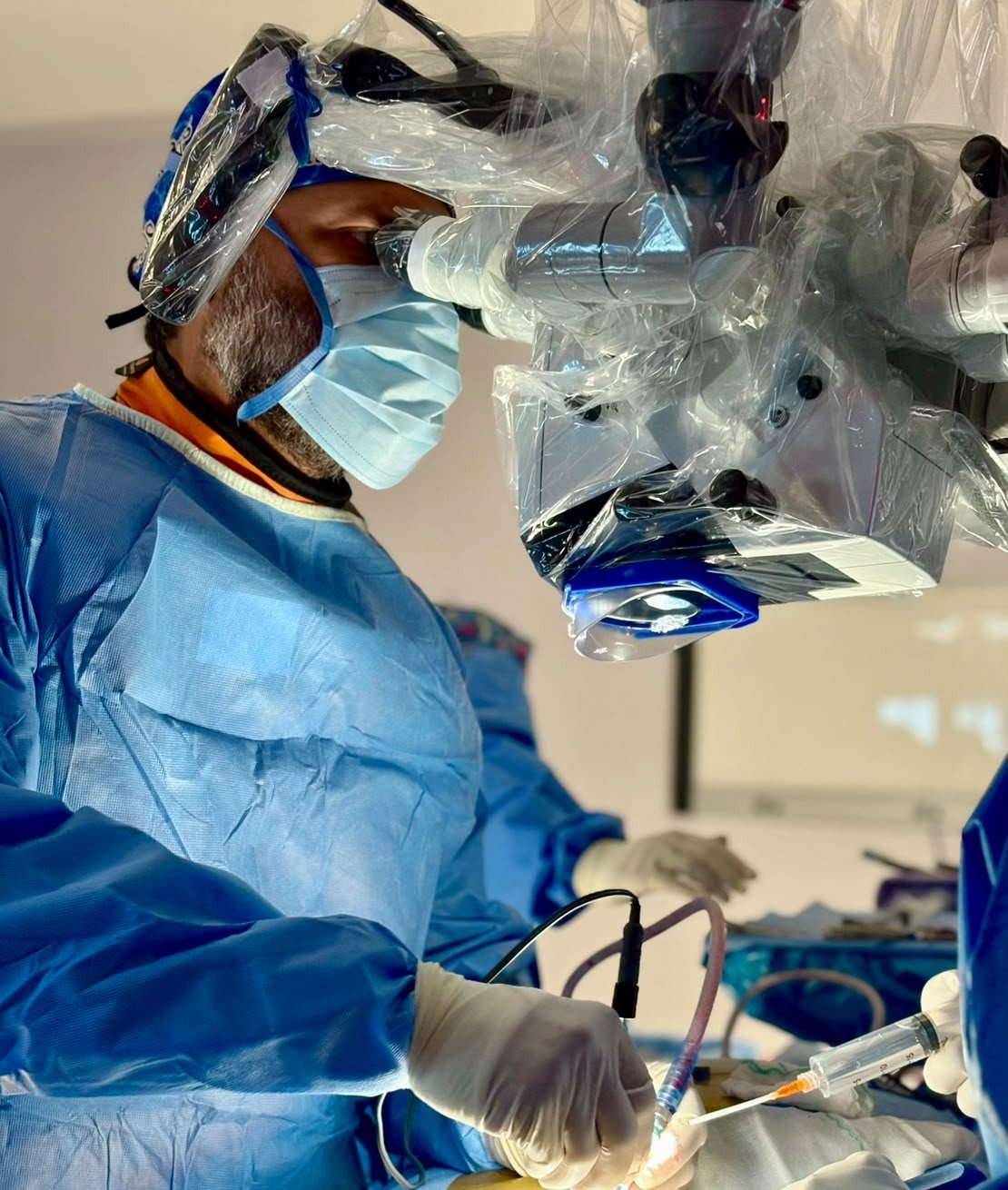
Operating Room Technology
Aneurysm surgery relies on a high-definition surgical microscope, neuronavigation, and intraoperative neurophysiological monitoring to enhance precision and help preserve function.
Results depend on each patient's individual factors and the type of lesion, and are not a guarantee of outcome.
Recovery
Recovery After Brain Aneurysm Surgery
Clinical recovery after brain aneurysm treatment depends on the therapeutic approach, the vessel's condition beforehand, and each patient's individual characteristics.
For clipping of an unruptured aneurysm, Dr. García Zamarrón typically anticipates around 3 days of hospital stay and a gradual return to activities over about 3 to 6 weeks. When the aneurysm was ruptured, recovery is individual and cannot be expressed as a general range.
How Long Does Recovery Take?
Unruptured aneurysm clipping: approximately 3 days in the hospital; return to work typically within 4 to 6 weeks, gradually (timeframes may vary).
¿Cuándo puede viajar?
After brain surgery, the doctor typically recommends waiting around 15 days before flying, depending on each patient's recovery.
Life After Treatment
Many patients return to their normal life after recovery, with follow-up imaging studies. Timelines and outcomes depend on each individual case.
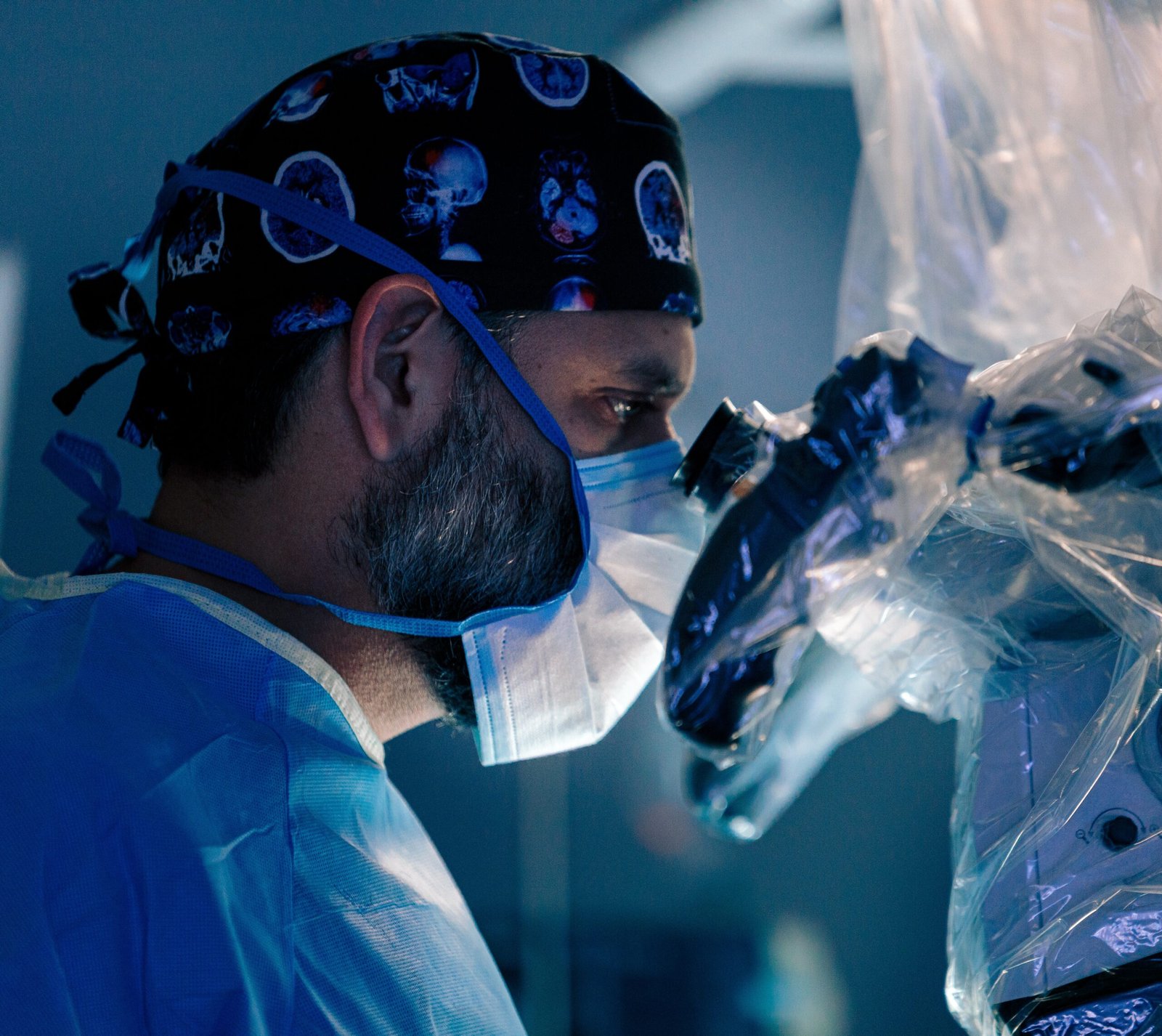
INTERNATIONALLY TRAINED NEUROSURGEON — MINUTES FROM EL PASO
Dr. José Raúl García Zamarrón
Brain Aneurysm Specialist · Vascular & Minimally Invasive Neurosurgery
Dr. José Raúl García Zamarrón is a neurosurgeon in Ciudad Juárez who specializes in treating brain aneurysms through microsurgical clipping and endovascular embolization. He is certified by the Mexican Council of Neurological Surgery (Consejo Mexicano de Cirugía Neurológica) and completed international training at referral centers in Europe and South America. He treats brain and spine conditions with an emphasis on minimally invasive techniques, and operates exclusively at Hospital Angeles Ciudad Juárez.
Professional License 6241285 · Specialty License 10138902
Master's in Spine Surgery
Neurosurgery Specialty
Vascular Surgery
Member of AO Spine
Experience in Cerebrovascular Neurosurgery
Certified by the Mexican Council of Neurological Surgery (CMCN)
VERIFIED PATIENT REVIEWS
What Patients Say About Dr. García Zamarrón
Verified Reviews on Doctoralia
Patient trust is part of what backs Dr. García Zamarrón's practice — he maintains a 5.0 rating across 398 reviews on Doctoralia.
"When I first came to Dr. García's office I had a lot of questions, but he answered every one with patience and clarity, always making me feel I was in the best hands. The day before my surgery he explained everything in detail; I even brought a notebook full of questions and he answered each one. On the day of the surgery, before I went into the operating room, he came to see me to reassure me and make sure everything would go well…" "
M.E.M
Hospital Angeles -Oct 2025
Verified review
"Dr. García Zamarrón is an excellent doctor. At my appointment he gave me my diagnosis, explained the procedure I needed, and walked me through what to expect. After the surgery he and his medical team looked after me throughout my recovery, answering any question I had as quickly as possible…"
L.V.
Hospital Angeles - Abril 2025
Verified review
"Dr. García Zamarrón is an excellent physician. From the very first consultation, he explained everything with clarity and answered every single one of my questions with a great deal of patience. He is also very accessible through the office WhatsApp for any minor question..."
K.A.
Hospital Angeles - Feb 2025
Verified review
Frequently Asked Questions
Frequently Asked Questions About Brain Aneurysm
What is a brain aneurysm?
A brain aneurysm is a bulge in a weakened area of a brain artery's wall. It often causes no symptoms and is discovered incidentally during an imaging study. Its significance lies in the fact that, if it grows or ruptures, it can cause severe bleeding — which is why it's worth having evaluated by a neurosurgeon.
What are the symptoms of a brain aneurysm?
Most unruptured aneurysms cause no symptoms. When symptoms do occur, they can include an unusual headache, double vision, or a drooping eyelid. If the aneurysm ruptures, it causes a sudden, extremely intense headache — the worst of one's life — which is a medical emergency: call 911.
Does a brain aneurysm always cause symptoms?
No. Most unruptured brain aneurysms are silent and are detected incidentally while imaging for something else. Precisely for that reason, when one is found, it's worth having it evaluated by a neurosurgeon to assess its risk and decide, depending on the case, whether to treat it or monitor it.
Is a brain aneurysm operable if diagnosed early?
Yes. An aneurysm detected early is usually treatable on an elective basis, either with microsurgical clipping or endovascular embolization. Detecting it before a rupture allows the treatment to be planned calmly and, when the case allows, reduces the risk of future bleeding.
What's the difference between clipping and embolization (coiling)?
Clipping closes the aneurysm from the outside, with a small clip placed through a craniotomy; embolization fills it from the inside, using coils delivered by catheter. Clipping offers a very durable closure; embolization often involves a shorter recovery. The choice is decided on a case-by-case basis.
How is the right treatment decided for my aneurysm?
The decision is individualized. The neurosurgeon considers the aneurysm's size, shape, and location, whether it's ruptured, your age, and your medical history. Based on that information, the choice is made between clipping, embolization, or monitoring. There's no single technique that's best for everyone — the right one is the one that best fits your case.
How long is recovery after aneurysm surgery?
It depends on the technique used and whether the aneurysm was ruptured. For clipping of an unruptured aneurysm, a hospital stay of about 3 days is typical, with a gradual return to activities over 3 to 6 weeks. When the aneurysm was ruptured, recovery is individual and cannot be expressed as a general range.
What is life like after aneurysm embolization?
Many patients return to their normal life after recovery. Embolization often involves a shorter hospital stay and recovery than open surgery, when the case allows. Follow-up imaging is then performed periodically to monitor the outcome, as directed by your neurosurgeon.
How much does brain aneurysm surgery cost, and how does payment work for U.S. patients?
Cost depends on each case: the type of aneurysm, the recommended technique, and the surgical plan. That's why the first step is an evaluation, where your imaging is reviewed and the recommended procedure is explained. Consultations are self-pay, in U.S. dollars; U.S. insurance is not accepted. You can schedule your evaluation by WhatsApp or by phone with the office.
Which specialist treats brain aneurysms?
Brain aneurysms are treated by a neurosurgeon, particularly one specializing in vascular neurosurgery. This specialist performs microsurgical clipping and, together with an endovascular therapy team, determines whether embolization is appropriate. Dr. García Zamarrón is an internationally trained neurosurgeon and sees patients at Hospital Ángeles in Ciudad Juárez, Chihuahua.
How do I choose a neurosurgeon for a brain aneurysm?
Look for a neurosurgeon with accredited training, a verifiable specialty license, and experience in vascular neurosurgery. Dr. García Zamarrón is certified by the Mexican Council of Neurological Surgery, has international training, and holds specialty license 10138902. An initial consultation lets you get to know the doctor and have your questions answered before deciding.
Where does Dr. García Zamarrón operate?
Dr. García Zamarrón operates exclusively at Hospital Ángeles Ciudad Juárez — about 20 minutes from the international bridges. His office for consultations is located at Av. Campos Elíseos 9371, Office 795, Col. Campos Elíseos, C.P. 32420. You can schedule a consultation by phone at 656 227 1963 or by WhatsApp at 656 657 7818.
SCHEDULE AN APPOINTMENT
Your health deserves attentive,
trusted care.
Receive a personalized evaluation and understand your treatment options for your case.
Hospital Angeles Ciudad Juárez
Office 795, Av. Campos Elíseos 9371, Col. Campos Elíseos, 32420 Ciudad Juárez, Chih.
656 657 7818
Phone
656 227 19 63
Hours
Monday to Friday, 9:00 a.m.–5:00 p.m.
Saturday, 9:00 a.m.–12:00 p.m.