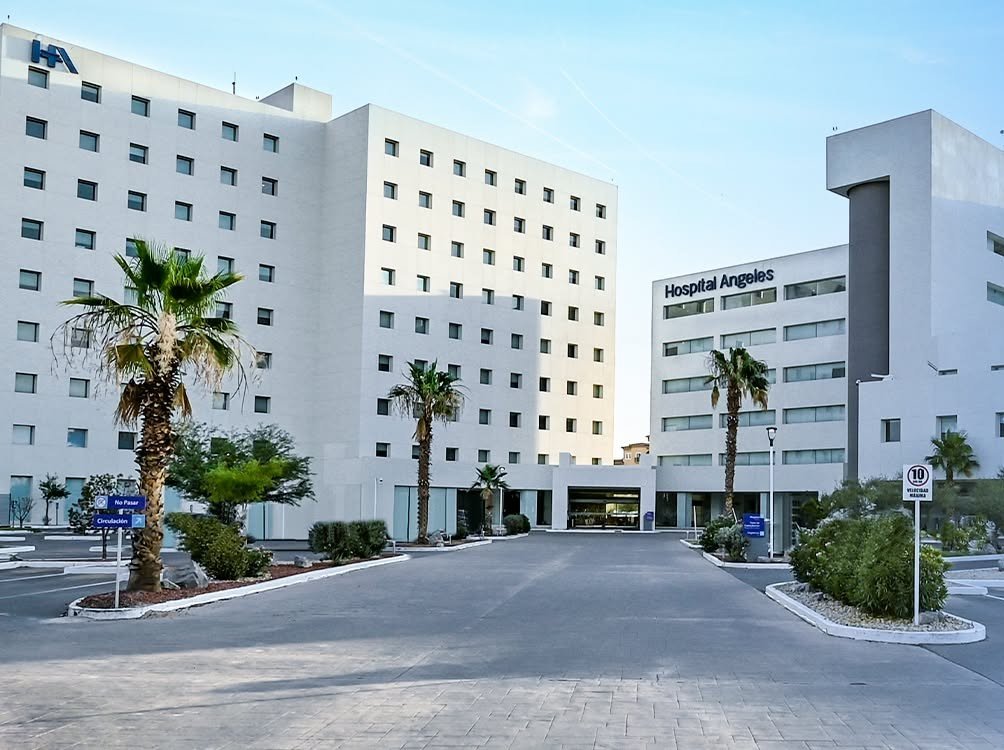
Spine Surgery in Ciudad Juárez, near El Paso – Hospital Ángeles.
Spine Surgery
Minimally Invasive — Just Across the Border
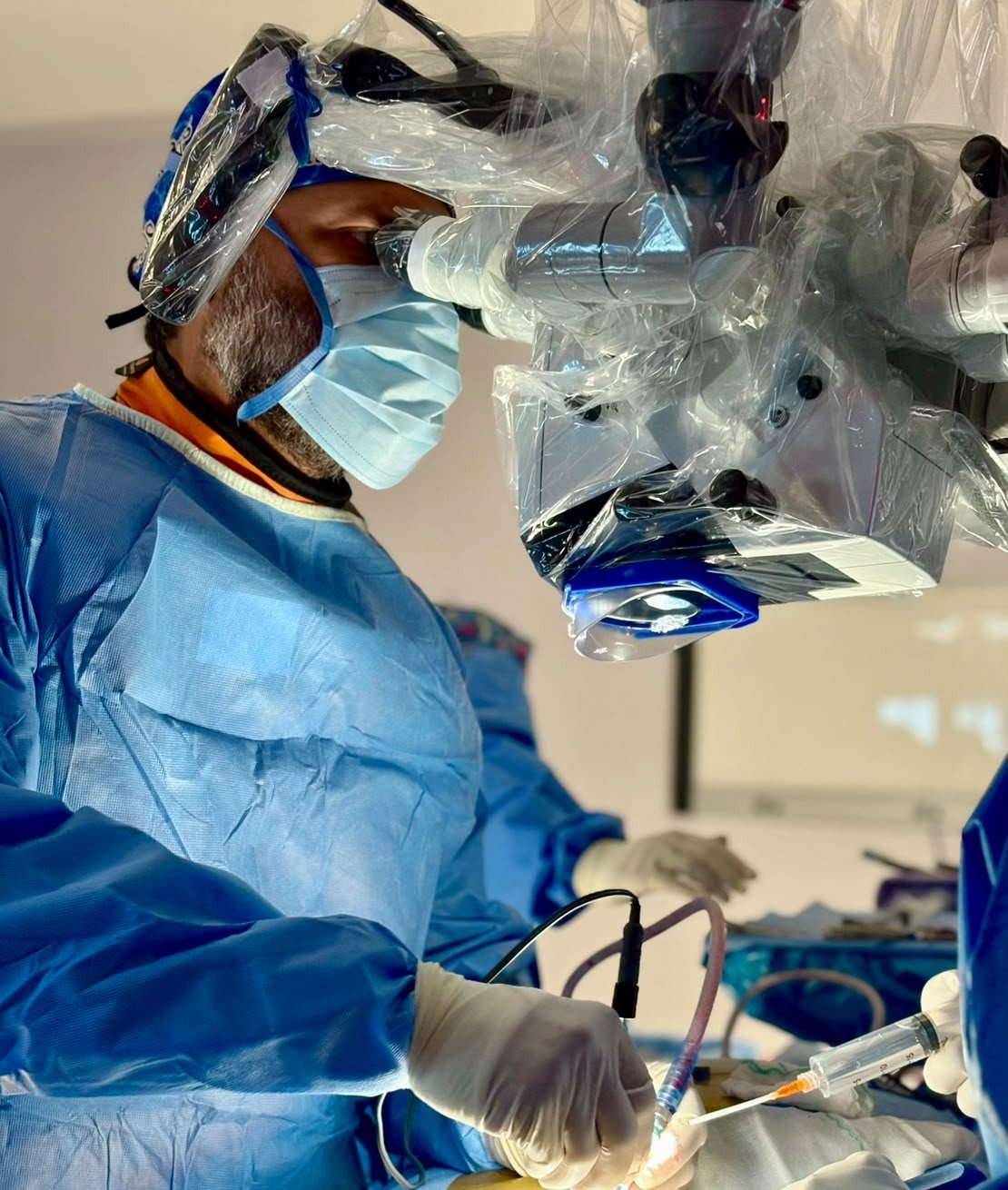
Minimally invasive spine surgery treats herniated discs, sciatica, spinal tumors, and lumbar stenosis, along with a wide range of spine conditions, accessing the spine through the body's natural corridors without cutting the muscles that support the back.
HOSPITAL STAY
Aprox. 24 horas
RECOVERY TIME
2 to 4 weeks
CONDITIONS TREATED
See more »
TYPE OF ANESTHESIA
General or regional
WHAT IT IS AND HOW IT WORKS
What Is Minimally Invasive Spine Surgery?
Minimally invasive spine surgery isn't defined by incision size — it's defined by preserving healthy tissue. Its purpose is to resolve the underlying spine problem — a herniated disc, nerve compression, instability — while altering the surrounding structures as little as possible.
Minimally Invasive Spine Surgery
Less muscle damage
Incisions through natural body corridors
Recovery is typically faster
Usually involves less post-operative pain
Hospital Stay: Typically 1 day
Traditional Open Spine Surgery
May involve more post-operative pain
Recovery is generally longer
Requires a larger incision
Hospital Stay: Usually longer
Indicated for specific cases
Results vary by patient and are not a guarantee of outcome.
SYMPTOMS
Spine Symptoms You Shouldn't Ignore
Spine symptoms vary depending on the affected area and the nerve involved — they can range from back or neck pain to pain radiating down the leg or arm, tingling, numbness, or weakness. Not every patient experiences the same symptoms, and some warrant an evaluation without delay.
Common Spine Symptoms
Here are some of the symptoms you may be experiencing.
Lower back pain that won't go away
Pain in the lower back that persists for weeks and doesn't improve with rest or pain medication. When chronic low back pain is constant, it can have a structural cause — disc wear or spinal instability — worth investigating.
Pain radiating down the arm
Pain that starts in the neck and travels down the arm, sometimes with tingling or weakness. This is the classic sign of a compressed nerve root, as seen in a cervical disc herniation.
Persistent neck or back pain
Ongoing discomfort that doesn't improve with rest or standard treatment after several weeks.
Tingling or numbness
A feeling of electric current, numbness, or loss of sensation in an arm, hand, leg, or foot, depending on the nerve involved.
Sciatica
Pain that starts in the lower back and travels down the leg, sometimes with tingling or weakness. This is the classic sign of a compressed nerve root — what many call a "pinched nerve" — as seen in a lumbar disc herniation.
Hand clumsiness or difficulty walking » Warning sign
Lack of hand coordination or unsteadiness while walking. This deserves prompt evaluation.
Pain while walking or standing
Heaviness or pain in the legs while walking that improves with sitting or bending forward. A typical pattern of lumbar stenosis.
Weakness in a limb
Difficulty gripping objects, lifting the foot, or supporting your body weight. Often accompanies pain and numbness.
WARNING SIGNS
When
You Shouldn't Wait
If you experience any of these signs, go immediately to the nearest emergency room or call 911.
If you're already a patient of Dr. García Zamarrón, please also let us know at 656 657 7818 or 656 315 1115 so we can coordinate your care.
Loss of bladder or bowel control
Hand clumsiness or difficulty walking
Numbness in the genital or buttock area
Progressive loss of strength in a leg, arm, or hand
SPINE SURGERY EXPERT — MINUTES FROM EL PASO
Spine Conditions
Dr. García Zamarrón treats a wide range of spine conditions, from the most common — herniated discs, sciatica, and spinal stenosis — to spinal deformity, fractures, and vertebral tumors.
Spine Conditions
Below are some common spine conditions.
- Degenerative disc disease
- Vertebral fracture
- Spinal cord tumor: intramedullary / extramedullary
- Cervical, thoracic, or lumbar disc herniation
- Failed back surgery syndrome
- Spina bifida
- Chiari malformation
- Scoliosis / adult spinal deformity
- Syringomyelia
- Spondylolisthesis
- Spinal infection (epidural abscess)
- Vertebral metastases (spinal bone tumors)
- Osteoporotic vertebral fracture
- Spinal stenosis (myelopathy / radiculopathy)
Comprehensive Diagnosis and Treatment
Identifying the root cause of your pain is the first step: a specialized evaluation, supported by imaging studies, allows for an accurate diagnosis and a clear treatment plan.
Spine Surgery in Ciudad Juárez — Minutes from El Paso
Advanced, minimally invasive spine surgery
Based on your diagnosis, Dr. García Zamarrón selects the minimally invasive technique best suited to your cervical or lumbar spine—from microdiscectomy to anterior-approach fusion.

Lumbar Fusion
Lumbar fusion joins two or more vertebrae to stabilize painful or unstable spinal segments, indicated in cases of spondylolisthesis, disc wear, or deformity. Dr. García Zamarrón selects the most appropriate surgical approach based on your specific diagnosis.
ALIF — Anterior Approach
Accesses the lumbar spine through the abdomen instead of the back, avoiding separation of the supporting muscles and allowing for larger implants. This is Dr. García Zamarrón's primary approach when the case allows.
TLIF — Posterior Approach
Accesses the spine from the back through a lateral corridor that reaches the disc without retracting the nerve sac more than necessary. It's used when the segment also requires posterior decompression or when anatomy doesn't favor an anterior approach.
XLIF — Lateral Approach
Accesses the spine from the side, using a natural corridor between tissues, without abdominal incision or back muscle dissection. It's performed at select levels of the lumbar spine.
Endoscopic discectomy
Using a minimally invasive camera that enters through a natural corridor and provides an enlarged view, this endoscopic technique removes the portion of disc compressing the nerve, offering an alternative to traditional microdiscectomy.
Uniportal Endoscopic Spine Surgery
Performed through a single access point: the endoscope and instruments enter through the same working channel. It's the most direct approach and leaves a single incision just a few millimeters wide.
Biportal Endoscopic Spine Surgery
Uses two very small access points: the camera enters through one, and instruments through the other. Working separately provides greater freedom of movement and a wider field of view, useful in cases requiring more extensive decompression.
Percutaneous instrumentation
Placement of screws and rods to stabilize the spine through very small incisions, without widely opening the back muscles. It's guided by real-time imaging — such as the O-Arm system and neuronavigation — to position each screw with precision.
Vertebroplasty / kyphoplasty
Minimally invasive procedures to treat compression fractures, common in bone weakened by osteoporosis. They involve injecting a special bone cement into the fractured vertebra to stabilize it. In select cases, they help reduce pain and restore stability.
Spinal Fracture Stabilization (Vertebral Fixation)
Stabilizing a vertebral fracture aims to restore the spine's structure when a vertebra breaks due to trauma or a weakening condition. Using fixation systems and, when possible, minimally invasive techniques, the affected segment is realigned to protect the spinal cord and prevent deformity.
Vertebroplasty and Kyphoplasty (Vertebral Reinforcement)
Vertebroplasty and kyphoplasty are minimally invasive procedures to treat compression fractures, common in bone weakened by osteoporosis or affected by a tumor. They involve injecting bone cement into the vertebra to stabilize it; kyphoplasty also uses a small balloon to help restore height.
Laminectomy (Spinal Canal Decompression)
Laminectomy is the surgery used to treat spinal stenosis, the narrowing of the canal through which the spinal cord and nerves pass. It involves removing the vertebral lamina and thickened tissue compressing the nerve structures, widening the space to relieve pain or difficulty walking.
Anterior Spinal Fusion (Lumbar Fusion)
Anterior spinal fusion stabilizes the lumbar segment by accessing the spine through the abdomen instead of the back. This approach allows direct access to the disc and the placement of larger implants to restore the spine's natural height and curvature, without separating the supporting muscles.
Microdiscectomy (Herniated Disc Surgery)
Microdiscectomy is one of the most common surgeries for treating a herniated disc. It involves removing the herniated portion of the disc that's compressing the nerve root, with microscopic precision through a minimal incision. By preserving the surrounding healthy tissue, it supports a faster recovery when the case allows.
Foraminotomy (Nerve Root Decompression)
Foraminotomy widens the opening where a spinal nerve root exits when it narrows and compresses the nerve.
It's indicated for radiculopathy — pain, tingling, or weakness radiating to an arm or leg. Widening this space aims to relieve pressure on the affected nerve.
INTERNATIONALLY TRAINED NEUROSURGEON
Dr. José Raúl García Zamarrón
Specialist in Trigeminal and Cranial Nerve Disorders
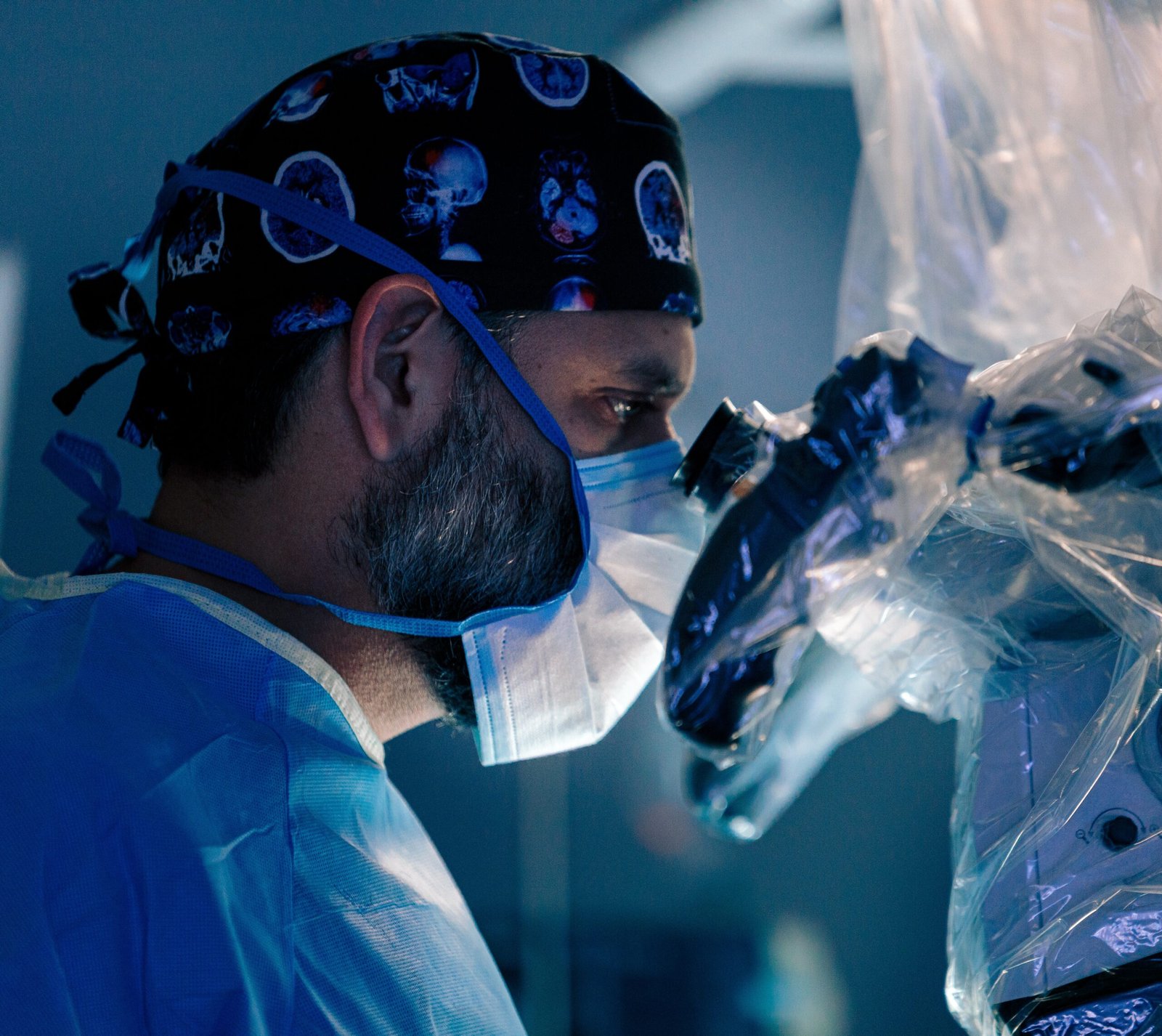
I'm a neurosurgeon specializing in spine surgery, minutes from El Paso in Ciudad Juárez, with advanced international training in minimally invasive techniques recognized by European and global standards. I combine precise diagnosis with millimeter-precision technology to address complex conditions through minimal incisions, with the goal of reducing impact on surrounding tissue and supporting a faster recovery.
Professional License 6241285 · Specialty License 10138902
Master's in Spine Surgery
Neurosurgery Specialty
Vascular Surgery
Member of AO Spine
Member of EANS
Certified by the Mexican Council of Neurological Surgery (CMCN)
VERIFIED PATIENT REVIEWS
What Patients Say About Dr. García Zamarrón
Verified Reviews on Doctoralia
Patient trust is part of what backs Dr. García Zamarrón's practice — he maintains a 5.0 rating across 398 reviews on Doctoralia.
"When I first came to Dr. García's office I had a lot of questions, but he answered every one with patience and clarity, always making me feel I was in the best hands. The day before my surgery he explained everything in detail; I even brought a notebook full of questions and he answered each one. On the day of the surgery, before I went into the operating room, he came to see me to reassure me and make sure everything would go well…" "
M.E.M
Hospital Angeles -Oct 2025
Verified review
"Dr. García Zamarrón is an excellent doctor. At my appointment he gave me my diagnosis, explained the procedure I needed, and walked me through what to expect. After the surgery he and his medical team looked after me throughout my recovery, answering any question I had as quickly as possible…"
L.V.
Hospital Angeles - Abril 2025
Verified review
"Dr. García Zamarrón is an excellent physician. From the very first consultation, he explained everything with clarity and answered every single one of my questions with a great deal of patience. He is also very accessible through the office WhatsApp for any minor question..."
K.A.
Hospital Angeles - Feb 2025
Verified review
Frequently Asked Questions
Frequently Asked Questions About Spine Surgery
What are the symptoms of a lumbar herniated disc?
The most common symptoms are lower back pain that may radiate down the leg, tingling or numbness, and sometimes weakness when moving the foot. Pain typically worsens with sitting, coughing, or straining. If you're also losing strength, an evaluation is no longer optional.
I have back pain that radiates down my leg — what does that mean?
When pain starts in the lower back and travels down the leg, there's almost always a compressed nerve involved — this is what's known as sciatica. It's usually caused by a herniated disc or stenosis narrowing the space around the nerve. It's worth having evaluated, though it doesn't always require surgery.
When does a herniated disc need surgery?
Most herniated discs improve without surgery. Dr. García Zamarrón considers surgery when pain doesn't improve after several weeks of conservative treatment — medication, therapy, time — or when strength in the leg or arm is declining and getting worse. If your case doesn't require surgery, he'll tell you clearly.
Where does Dr. García Zamarrón operate?
Dr. José Raúl García Zamarrón operates at Hospital Ángeles Ciudad Juárez, located at Av. Campos Elíseos 9371, Office 795 — about 20 minutes from the international bridges. He is certified by the Mexican Council of Neurological Surgery, with international training at Vall d'Hebron (Spain) and Beneficência Portuguesa (Brazil).
How long is recovery after minimally invasive spine surgery?
Recovery typically takes 2 to 4 weeks, with a one-day hospital stay in most cases. Because the back muscles aren't cut, recovery tends to be faster than with open surgery. The exact timeline depends on your specific case and is confirmed during your evaluation.
What is lumbar stenosis, and what does it feel like?
Lumbar stenosis is a narrowing of the canal through which the lower back nerves pass. The typical symptom: the legs ache or tire after walking short distances, and the pain eases with sitting or bending forward. It's more common after age 60.
Why does my neck hurt with pain radiating down my arm?
Pain that starts in the neck and radiates down the arm usually comes from a cervical herniated disc compressing a nerve root — this is called cervical radiculopathy. It causes tingling, numbness, and in some cases, weakness in the hand. It's evaluated with an MRI, not a standard X-ray.
Is spine surgery risky?
Every surgery carries risk, and spine surgery is no exception. In Dr. García Zamarrón's personal experience, minimally invasive techniques are associated with a complication rate near 2%. This isn't a guarantee — it reflects what he has observed in his own practice. Before any surgery, Dr. García Zamarrón will walk you through the risks specific to your case.
Neurosurgeon or orthopedic surgeon for spine care?
Both neurosurgeons and orthopedic surgeons perform spine surgery. A neurosurgeon specializes in the nervous system — nerves, spinal cord, and nerve roots — which is exactly what needs to be protected during surgery. The best choice depends on your case; if you're unsure, a second opinion can help you decide with more information.
How much does spine surgery cost, and how does payment work for U.S. patients?
Cost depends on the specific procedure, your diagnosis, and the hospital — there's no single flat price. After your evaluation and a review of your imaging, you'll receive a clear, written cost estimate with no surprises. The evaluation is the first step. Consultations are self-pay, in U.S. dollars; U.S. insurance is not accepted. Feel free to reach out on WhatsApp with any questions.
SCHEDULE AN APPOINTMENT
Your health deserves attentive,
trusted care.
Receive a personalized evaluation and understand your treatment options for your case.
Hospital Angeles Ciudad Juárez
Office 795, Av. Campos Elíseos 9371, Col. Campos Elíseos, 32420 Ciudad Juárez, Chih.
656 657 7818
Phone
656 227 19 63
Hours
Monday to Friday, 9:00 a.m.–5:00 p.m.
Saturday, 9:00 a.m.–12:00 p.m.