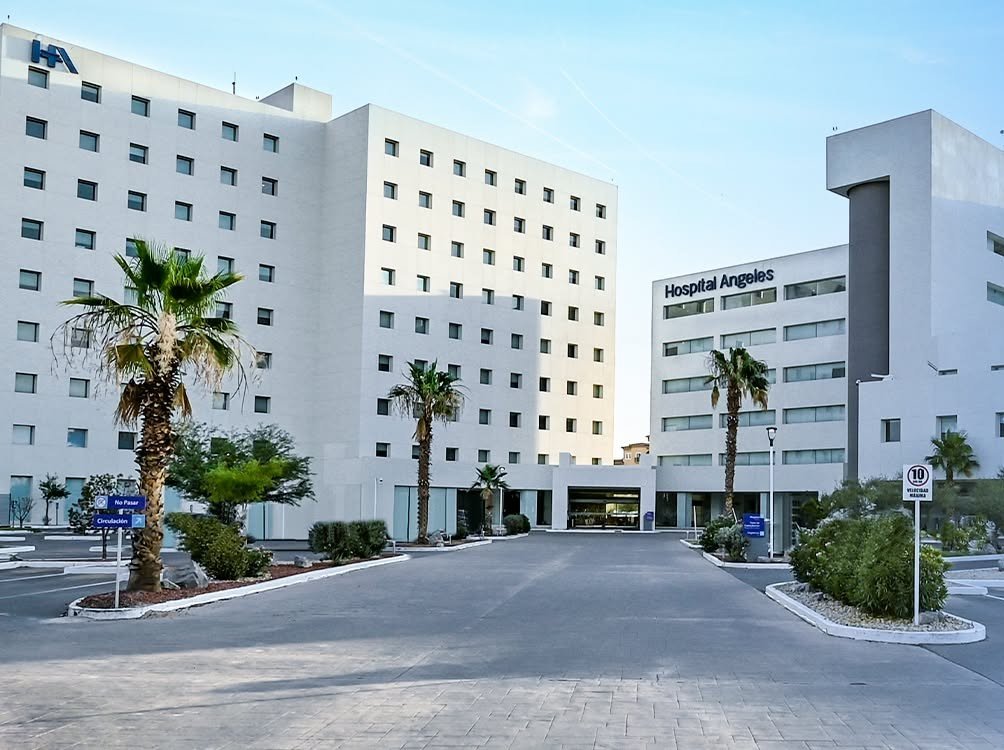
Brain Tumor Specialist — Hospital Ángeles, Minutes from El Paso
Minimally Invasive Brain Tumor Surgery
in Ciudad Juárez
Brain tumor surgery is a specialized procedure whose main goal is to remove as much tumor tissue as possible without compromising the patient's neurological function or well-being.
HOSPITAL STAY
3 días aprox.
RECOVERY TIME
2 to 4 weeks
Types of Tumors
See more »
TYPE OF ANESTHESIA
Conscious Sedation
What Is It?
Symptoms
Types of Tumors
Treatments
About the Specialist
Reviews
WHAT IT IS AND HOW IT WORKS
What Is Minimally Invasive Brain Tumor Surgery?
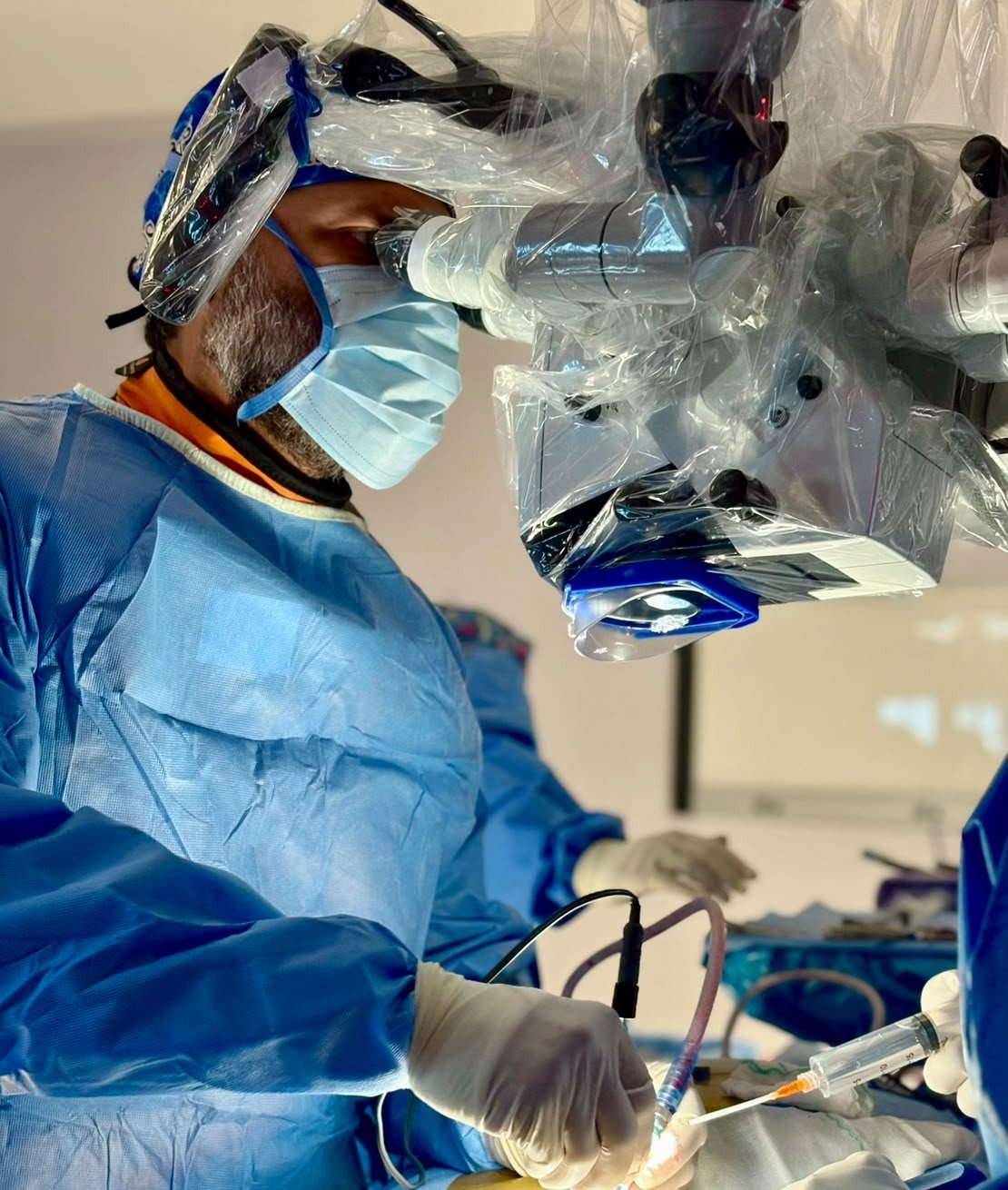
Minimally invasive brain tumor surgery isn't defined by incision size — it's defined by preserving healthy tissue: the goal is to remove the tumor while altering the surrounding structures as little as possible. To achieve this, it relies on precision techniques — neuronavigation, intraoperative imaging, and brain mapping — that guide every movement and help preserve the brain's critical areas.
Minimally Invasive Endoscopic Brain Surgery
Preserves surrounding healthy tissue
Precision guided by neuronavigation
Aims to preserve neurological function
Recovery is typically faster (when the case allows)
Hospital Stay: Typically 3 days
Traditional Open Craniotomy
Requires a larger opening
May involve a longer recovery
Indicated for specific cases
Results depend on each patient's individual factors and the type of lesion, and are not a guarantee of outcome.
SYMPTOMS
Brain Tumor Symptoms in Adults You Shouldn't Ignore
Brain tumor symptoms depend on the tumor's size, type, and location, so not every patient experiences the same signs.
Common Brain Symptoms
Here are some of the symptoms you may be experiencing. Recognizing them early allows for prompt evaluation.
Headaches
A new or different headache than your usual pattern, one that worsens over time, is more intense upon waking, or gets worse with coughing or straining. Most aren't serious, but a changing pattern deserves evaluation.
Vision changes
Blurred or double vision, blind spots, or unusual light sensitivity, when a lesion affects the brain's visual pathways.
Seizures
A first-time seizure in adulthood should always be evaluated. Not all seizures involve losing consciousness — some present only as tingling, brief confusion, or momentary difficulty speaking.
Changes in memory, speech, or behavior
Difficulty finding words, remembering everyday things, or mood changes that people close to you notice as different.
Weakness on one side of the body » Warning sign
Loss of strength or sensation in an arm, leg, or one side of the face, almost always on a single side. This deserves prompt evaluation.
Balance or coordination problems
Unsteadiness, clumsy movements, or difficulty walking, often more pronounced on one side.
Nausea or vomiting with no apparent cause
Persistent, with no digestive origin, especially in the morning and accompanied by headache. May indicate increased pressure inside the skull.
WARNING SIGNS
When
You Shouldn't Wait
If you experience any of these signs, go immediately to the nearest emergency room or call 911.
If you're already a patient of Dr. García Zamarrón, please also let us know at 656 657 7818 or 656 315 1115 so we can coordinate your care.
The worst headache of your life, of sudden onset
Sudden loss of strength on one side of the body
Loss of consciousness or sudden changes in vision or speech
A first-time seizure
BRAIN TUMOR NEUROSURGEON
Brain Tumors Dr. García Zamarrón Treats
Dr. García Zamarrón evaluates and operates on the most common brain tumors, both benign and malignant. It's important to know that not all brain tumors are cancer, and even benign tumors may require treatment when they compress surrounding tissue and cause symptoms.
Meningiomas
See more »
This is the most common primary brain tumor. Most are benign and slow-growing; depending on size and location, they can be monitored or surgically removed.
Gliomas
See more »
Tumors that originate in the brain's supporting cells. Their grade, ranging from least to most aggressive, determines the treatment plan.
Glioblastoma
See more »
This is the most common malignant brain tumor. Treatment is multidisciplinary: surgery aims to achieve the greatest safe resection as a first step, complemented by additional therapies as recommended by the care team.
Brain metastases
See more »
These are secondary tumors that spread to the brain from cancer originating elsewhere in the body. Management is coordinated within the patient's overall oncology care plan.
Skull Base Tumors
See more »
Located at the base of the skull, a region with delicate anatomy where neuronavigation enables millimeter-precise access.
Pituitary Adenomas
See more »
Tumors of the pituitary gland, typically approached endoscopically through the nose.
The Difference Between a Benign and Malignant Tumor
A benign tumor grows slowly and doesn't invade neighboring tissue, while a malignant tumor grows faster and can infiltrate surrounding structures. Even so, a benign tumor can still be dangerous if it compresses important brain structures.
FEATURED PROCEDURE FOR PITUITARY TUMOR SURGERY
Pituitary Surgery Through the Nose (Endoscopic Transnasal Surgery)
Endoscopic transnasal transsphenoidal surgery allows pituitary tumors to be removed through the nose, without opening the skull. It's the standard approach for pituitary adenomas: performed using a camera and light through the nasal passages, with minimal tissue disruption and a low complication rate.
What Is a Pituitary Adenoma?
The pituitary is a pea-sized gland located at the base of the brain that regulates much of the body's hormone production. An adenoma is a tumor — almost always benign — that grows within it and can disrupt hormone production or compress the nerves responsible for vision.
Symptoms of a Pituitary Tumor
Symptoms can include headaches, vision changes, changes in menstrual cycle or libido, fatigue, and other signs of hormonal imbalance. Imaging studies and hormone testing confirm the diagnosis.
How Transnasal Surgery Is Performed
The surgeon reaches the pituitary gland through the nasal passages and sphenoid sinus, without any incisions on the face or skull. Neuronavigation guides the path with precision and helps protect surrounding structures.
Pituitary Tumor Specialist — Minutes from El Paso
Dr. García Zamarrón performs endoscopic pituitary surgery at Hospital Ángeles Ciudad Juárez, coordinating hormonal follow-up with endocrinology when the case requires it.
ADDITIONAL SURGICAL TREATMENTS FOR BRAIN TUMORS
Specialized Techniques for Tumor Resection
In addition to endoscopic nasal approaches for treating pituitary conditions, there are other specialized procedures for addressing tumors in different areas of the brain, including those in harder-to-reach locations.

Craniotomy for tumor resection (microsurgery)
This procedure provides direct access to the tumor through an opening in the skull. The surgical microscope offers enlarged, high-definition visibility, helping distinguish between healthy tissue and the lesion for a more precise removal.
Awake craniotomy
An advanced technique in which the patient is woken during surgery to perform real-time testing. This allows the care team to monitor vital functions like language or movement, protecting the most delicate brain areas while the tumor is removed.
Skull base surgery
A highly specialized approach designed to treat lesions in the brain's deepest and most complex areas. It requires precise microsurgical instruments and techniques to safely operate around critical nerves and blood vessels.
Fluorescence-guided surgery
Special substances are administered before surgery, causing tumor cells to glow under a specialized light through the microscope. This helps the neurosurgeon more clearly identify the tumor's borders and achieve a more complete resection.
INTERNATIONALLY TRAINED NEUROSURGEON
Dr. José Raúl García Zamarrón
Brain Tumor Specialist — Minutes from El Paso
I'm Dr. José Raúl García Zamarrón, a neurosurgeon with international training in minimally invasive techniques, focused on brain tumor, pituitary, and skull base surgery, minutes from El Paso in Ciudad Juárez. I combine precise diagnosis with precision technology to approach each case with as little impact on surrounding tissue as possible, supporting a faster recovery.
Professional License 6241285 · Specialty License 10138902
Master's in Spine Surgery
Neurosurgery Specialty
Vascular Surgery
Member of AO Spine
Member of EANS
Certified by the Mexican Council of Neurological Surgery (CMCN)
Technology-Assisted Neurosurgery
MILLIMETER PRECISION IN EVERY PROCEDURE
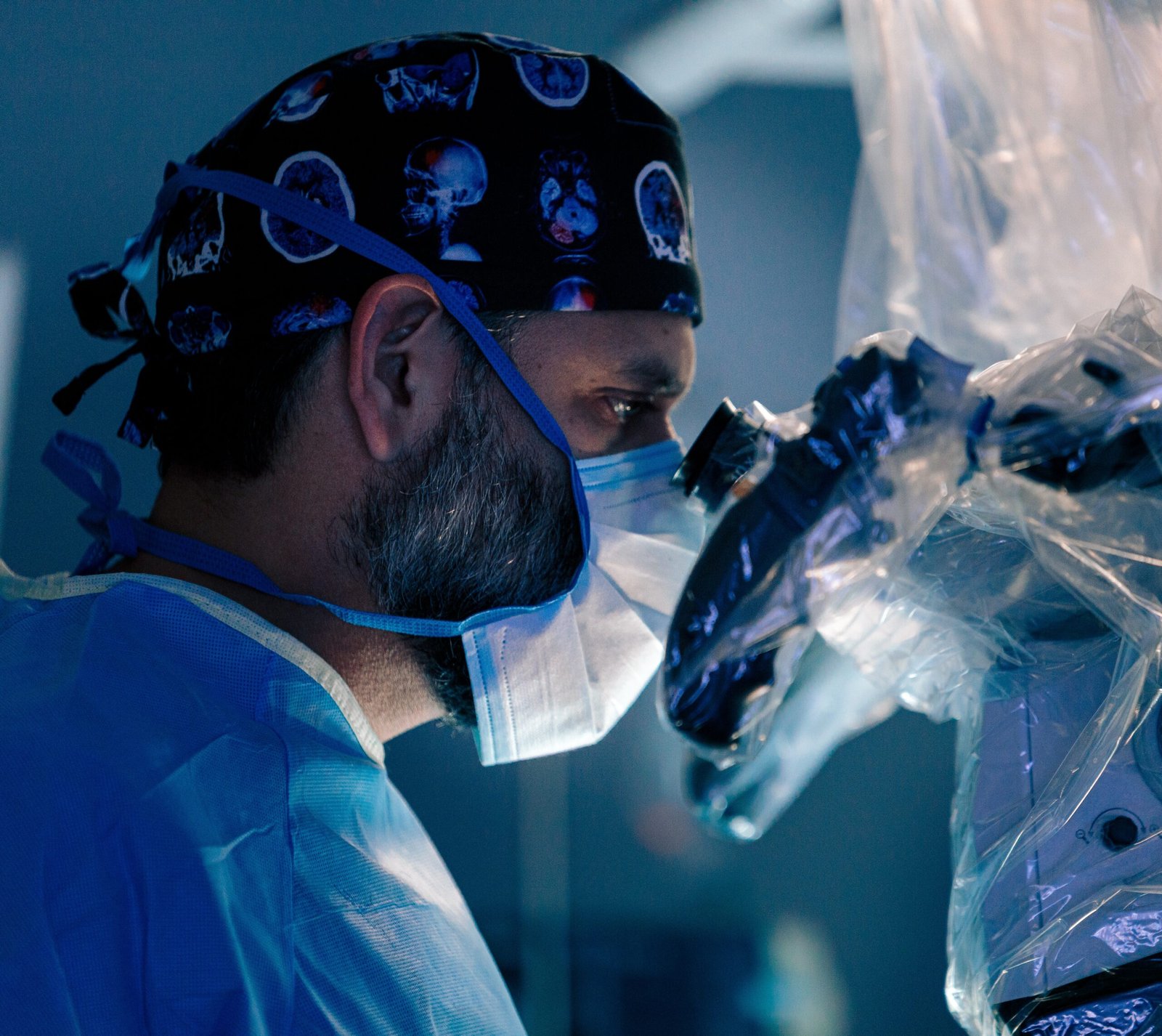
Highly specialized brain tumor resection relies on technology that elevates precision to near-millimeter levels. Neuronavigation guides the surgeon in real time with 3D images of the brain, while neurophysiological monitoring helps identify and preserve the areas responsible for speech and movement.
Neuronavigation
Guides every instrument to remove a lesion while protecting structures that must not be touched.
Neurophysiological Monitoring
Continuous monitoring of nerve function throughout surgery.
O-arm
Provides real-time 3D imaging for precise spinal implant placement, while neurophysiological monitoring tracks nerve function throughout the procedure.
Artificial Intelligence
Helps plan the surgical approach by generating 3D maps that identify critical areas to avoid.
Ultrasonic Surgical Aspirator
Advanced technology that uses ultrasonic vibrations to break down and remove tumor tissue with millimeter precision, protecting blood vessels and critical neurological structures during complex surgeries.
WHAT YOU SHOULD KNOW
Risks and Recovery from Brain Tumor Surgery
Every brain surgery carries risk, and these risks depend on the type of tumor and its location — which is why the plan is tailored to each patient. The guiding principle behind every procedure is achieving the greatest safe resection, always prioritizing the patient's quality of life.
Post-Operative Recovery
Recovery depends on the type of surgery, the tumor, and each patient's overall condition. Dr. García Zamarrón's team supports every stage of the post-operative process.
Effects of Pituitary Surgery
When pituitary function is affected, it can be restored through hormone replacement treatment. Some hormones, such as cortisol, are essential and are taken daily; in some cases, replacement is lifelong and adjusted together with an endocrinologist.
Complications
The risk of complications varies depending on the type of tumor and its location. We invite you to schedule a consultation for a personalized evaluation of your case.
VERIFIED PATIENT REVIEWS
What Patients Say About Dr. García Zamarrón
Verified Reviews on Doctoralia
Patient trust is part of what backs Dr. García Zamarrón's practice — he maintains a 5.0 rating across 398 reviews on Doctoralia.
"When I first came to Dr. García's office I had a lot of questions, but he answered every one with patience and clarity, always making me feel I was in the best hands. The day before my surgery he explained everything in detail; I even brought a notebook full of questions and he answered each one. On the day of the surgery, before I went into the operating room, he came to see me to reassure me and make sure everything would go well…" "
M.E.M
Hospital Angeles -Oct 2025
Verified review
"Dr. García Zamarrón is an excellent doctor. At my appointment he gave me my diagnosis, explained the procedure I needed, and walked me through what to expect. After the surgery he and his medical team looked after me throughout my recovery, answering any question I had as quickly as possible…"
L.V.
Hospital Angeles - Abril 2025
Verified review
"Dr. García Zamarrón is an excellent physician. From the very first consultation, he explained everything with clarity and answered every single one of my questions with a great deal of patience. He is also very accessible through the office WhatsApp for any minor question..."
K.A.
Hospital Angeles - Feb 2025
Verified review
Frequently Asked Questions
Frequently Asked Questions About Brain Tumor Surgery
What should I do after a brain tumor diagnosis?
Gathering your imaging studies and seeking a specialized evaluation is the first step toward understanding your options calmly and with clear information.
What brain tumor symptoms shouldn't I ignore?
The most common brain tumor symptoms are a new headache pattern, a new-onset seizure in adulthood, vision changes, weakness on one side of the body, and changes in memory or behavior. These depend on the tumor's location and should be evaluated by a neurosurgeon.
What's the difference between a benign and malignant brain tumor?
A benign brain tumor grows slowly and doesn't invade neighboring tissue, while a malignant tumor grows faster and can infiltrate surrounding structures. An accurate diagnosis is confirmed through imaging studies and tissue analysis. This distinction determines the most appropriate treatment for each patient.
Is a benign brain tumor dangerous?
Yes, a benign brain tumor can be dangerous. Even though it isn't cancerous, as it grows it can compress brain tissue and cause symptoms such as headaches, vision changes, or seizures. That's why even benign tumors require monitoring and, in some cases, treatment.
What is pituitary surgery through the nose?
Pituitary surgery through the nose, or endoscopic transnasal transsphenoidal surgery, allows pituitary tumors to be removed through the nasal passages, without opening the skull. It's the standard approach for pituitary adenomas and is generally associated with a low complication rate.
Why consider a minimally invasive approach?
When the case allows, a minimally invasive approach aims to preserve healthy tissue and support a faster recovery, always prioritizing patient safety.
Can you live without a pituitary gland?
Yes. When the pituitary gland stops producing its hormones, they can be replaced through a hormone replacement treatment prescribed by a specialist. Some hormones, like cortisol, are essential and are taken daily. With proper replacement and medical follow-up, a normal life is possible.
What is recovery like after brain surgery?
Recovery after brain surgery varies depending on the type of procedure, the tumor, and each patient's overall condition. Dr. García Zamarrón's team supports every stage of the post-operative process. Specific timelines are explained during your evaluation, tailored to your case.
Is brain tumor surgery minimally invasive?
Not all brain tumors are operated on the same way. When the case allows, Dr. García Zamarrón uses minimally invasive approaches, supported by neuronavigation and brain mapping, aimed at preserving healthy tissue and neurological function. The technique is selected based on the diagnosis.
When should I see a neurosurgeon?
It's a good idea to see a neurosurgeon if you have persistent neurological symptoms — a changing headache pattern, seizures, weakness, or vision changes — or when an imaging study detects a tumor. A specialized evaluation helps establish an accurate diagnosis and your treatment options.
How much does pituitary surgery cost, and how does payment work for U.S. patients?
The cost of pituitary surgery depends on the type of tumor, the surgical technique, and each patient's specific needs, so it's determined after your evaluation. Consultations are self-pay, in U.S. dollars; U.S. insurance is not accepted. To get a cost estimate tailored to your case, schedule a consultation with Dr. García Zamarrón.
Where does Dr. García Zamarrón operate?
El Dr. García Zamarrón realiza sus cirugías en el Hospital Angeles Ciudad Juárez y atiende consulta en Av. Campos Elíseos 9371, Consultorio 795. Puede agendar una valoración por WhatsApp al 656 657 7818 o al teléfono 656 227 1963.
SCHEDULE AN APPOINTMENT
Your health deserves attentive,
trusted care.
Receive a personalized evaluation and understand your treatment options for your case.
Hospital Angeles Ciudad Juárez
Office 795, Av. Campos Elíseos 9371, Col. Campos Elíseos, 32420 Ciudad Juárez, Chih.
656 657 7818
Phone
656 227 19 63
Hours
Monday to Friday, 9:00 a.m.–5:00 p.m.
Saturday, 9:00 a.m.–12:00 p.m.